“
I picked three cities I lived in: Philadelphia, where I grew up, New York, where I went to college, and Gilbert, where I live now.
JD
John D
Imaginary Icebreaker
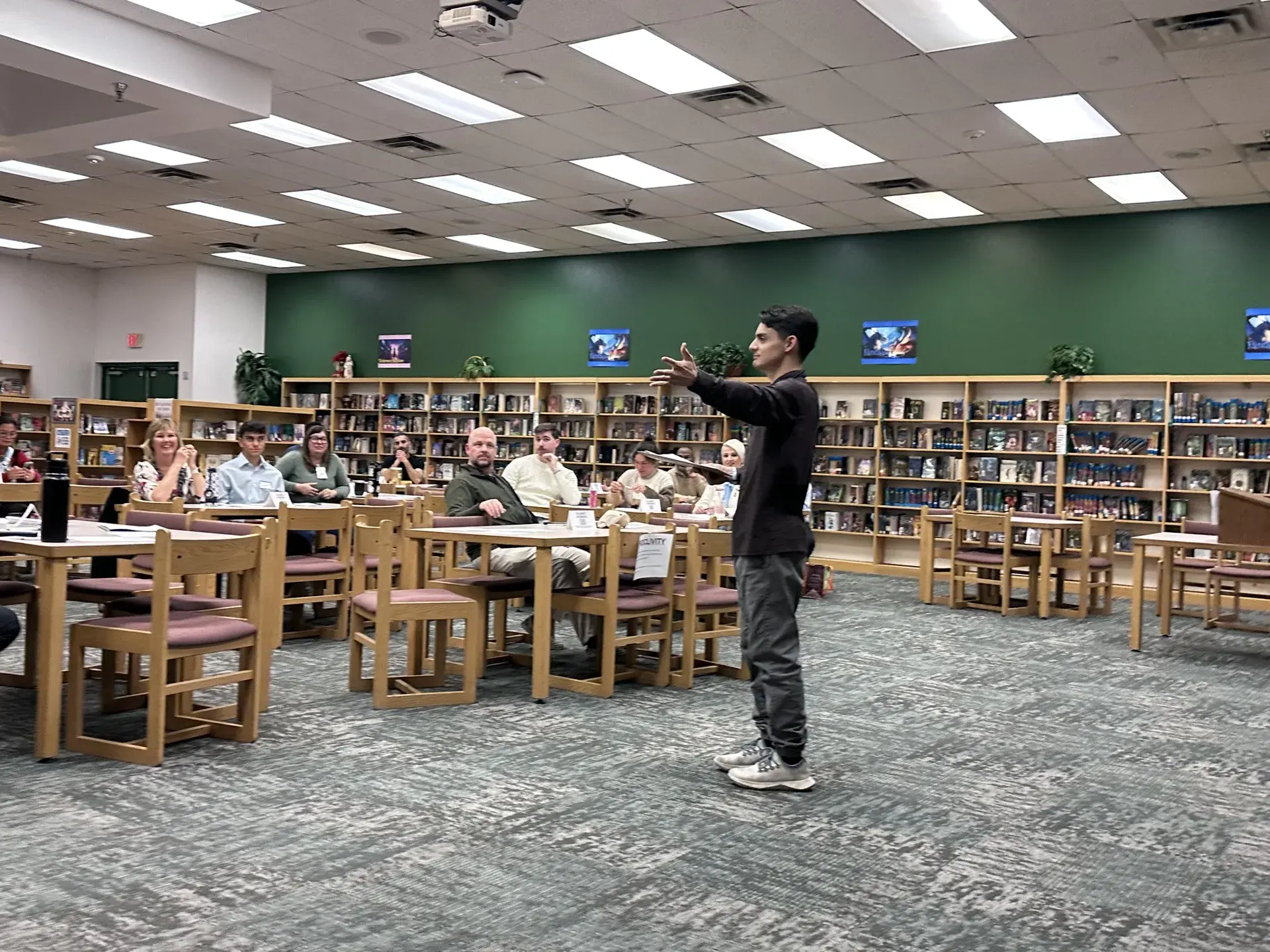
Your Icebreaker in Gilbert Toastmasters
Your Icebreaker is a 4-to-6-minute speech where you introduce yourself to the club. It's Project 1 in Level 1 of any Pathways path, and every Toastmaster gives one.
It's not a test. It's the room getting to know you, and you getting used to standing in front of it.
Your topic
The question isn't “what's the right thing to say?” It's “what do I want these people to know about me?”
Frameworks members use
Most-used framework
A four-part framework — one short story for each part. Easy to plan, easy to remember on stage.
F
Family
where you come from
O
Occupation
what you do all day
R
Recreation
what you do for fun
D
Dream
where you want to go
I picked three cities I lived in: Philadelphia, where I grew up, New York, where I went to college, and Gilbert, where I live now.
John D
Imaginary Icebreaker
Or try one of these
Three moments or experiences that shaped who you are today, and walk through each one.
Focus on one meaningful story that reveals who you are.
What brought you to Toastmasters and what you hope to gain.
Walk through your journey from childhood to now.
You don't need to cover everything. Pick two or three things that feel right and build from there.
There's no prescribed framework at Gilbert Toastmasters. Your speech, your call.
Stuck?
If you're staring at a blank page and can't figure out what to say, try answering one of these:
Sometimes one question is all it takes to unlock the whole speech.
Example
Icebreaker by David M, given at Gilbert Toastmasters in December 2023.
Before you go up
Do
Don't
Common questions
After your speech
Your evaluator will give a verbal evaluation in front of the club: what worked, what to try differently next time. Then they'll share written feedback with you.
After the meeting, sit down with your evaluator to go over their notes. Ask questions. This conversation is often more valuable than the evaluation itself.
Then mark the project complete in Base Camp. If you're not sure how, ask your mentor or the VPE.
And take a second to appreciate what you just did. Every member in that room gave an Icebreaker once. They remember what it felt like. That's why they'll be cheering for you.